
Commander Players Are Usually Looking for One Specific Feeling
There is a very particular kind of dopamine hit that Commander players chase.
Not just winning. Honestly, half the time Commander players barely care about winning. They care about doing “the thing.” Pulling off the combo. Building the engine. Politicking their way out of certain death after greedily keeping a two-land hand they absolutely should have mulliganed into the sun.
Commander is messy in a way most competitive games are not.
A four-player pod creates shifting alliances, weird table talk, accidental kingmaking, revenge attacks, and occasional emotional breakdowns over somebody resolving a board wipe at exactly the wrong moment. You are basically getting strategy gaming mixed with improv theater and low-level psychological warfare.
Which is why a lot of Commander players bounce off traditional board games.
Classic Eurogames can feel too clean. Too controlled. Too optimized. Some of them feel like you’re filing taxes competitively while moving tiny wooden cubes around Germany.
That might sound harsh.
It is harsh.
Still, there are board games that absolutely capture the same energy Commander players love. Games with engine building, politics, huge swings, asymmetrical powers, dramatic moments, ridiculous table stories, and the constant feeling that somebody at the table is quietly becoming a problem.
You know. Commander.
Dune: Imperium Feels Like a Smart Midrange Deck
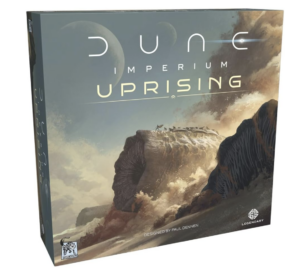
Dune: Imperium hits a sweet spot Commander players tend to love because it mixes resource management with tension and opportunistic timing.
You are building an engine, improving card synergies, competing for scarce resources, and occasionally ruining somebody else’s plans because you noticed a tiny opening before they did.
Sound familiar?
The deck-building aspect feels especially satisfying for MTG players because your choices compound over time. Early inefficiencies matter later. Synergy matters. Timing matters. Greed definitely matters, usually right before somebody punches your strategy in the throat.
The combat rounds also create those classic Commander-style table moments where everyone suddenly realizes the quiet player in the corner has become terrifying.
There is always one.
The guy who says, “I’m probably not winning this one,” right before scoring 14 points in two rounds and emotionally devastating the entire table.
If somebody enjoys slower Commander pods where value engines and incremental advantage matter more than infinite combos, Dune: Imperium tends to land incredibly well.
Root Captures Commander Politics Better Than Almost Anything
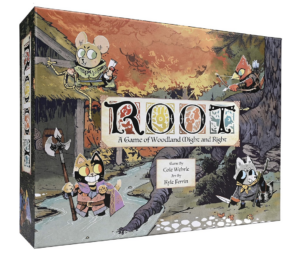
Root is one of the closest board game equivalents to multiplayer Commander politics I’ve ever played.
It is asymmetrical chaos disguised as woodland animals.
One faction operates like an insurgency. Another behaves like a military empire. One player basically becomes a wandering raccoon merchant who commits occasional war crimes for profit.
Adorable.
The brilliance of Root is that every faction feels fundamentally unfair in its own special way. That mirrors Commander perfectly. Every player arrives with different tools, different scaling, different threats, and wildly different timing windows.
The table talk becomes essential because threat assessment changes constantly.
Ignore the Woodland Alliance too long? Disaster.
Attack the Eyrie too aggressively? Now somebody else runs away with the game.
Trust the Vagabond? Congratulations. You played yourself.
Commander players usually adapt to Root quickly because they already understand multiplayer politics. They know alliances are temporary. They know the strongest board position is not always obvious. They know somebody saying “don’t worry about me” is usually the gaming equivalent of a horror movie character investigating a basement alone.
Also, if you enjoy commanders that snowball through value generation, games like Root create that exact same creeping panic.
“Oh no.”
“Oh NO.”
“We should have stopped him two turns ago.”
Beautiful stuff.
Twilight Imperium Is Basically Eight Hours of Commander Energy
Magnificent, ridiculous, exhausting absurdity.
This game routinely lasts six to eight hours. It contains diplomacy, betrayal, trade negotiations, warfare, secret objectives, political voting, resource management, and enough shifting alliances to make reality television producers nervous.
Naturally, Commander players adore it.
The overlap makes sense because both experiences revolve around emergent storytelling. Nobody remembers the final score nearly as much as they remember the betrayals, desperate negotiations, surprise victories, and galaxy-brain plays.
Twilight Imperium also captures something Commander players deeply enjoy: the illusion of stability right before complete collapse.
One moment everybody is calmly negotiating trade agreements. Thirty minutes later, Dave is blockading your home system because you accidentally insulted him during a political vote three hours earlier.
Petty behavior scales wonderfully in both games.
The downside? Twilight Imperium requires commitment. You do not casually squeeze it in between errands unless your errands involve abandoning civilization entirely.
Still, for dedicated hobby gamers, it creates unforgettable table experiences.
Clank! Feels Like a Greedy Commander Deck in the Best Way
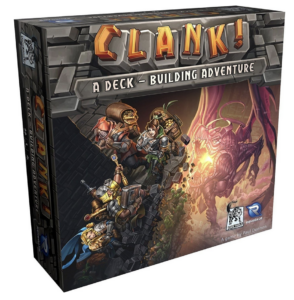
Clank! understands something fundamental about gamers.
People love greed.
Not responsible greed. Reckless goblin-level greed.
Every round of Clank! forces players to decide whether they should safely escape with decent treasure or risk absolute catastrophe chasing bigger rewards deeper in the dungeon.
Commander players understand this instinct immediately because they already make terrible decisions constantly.
“Oh, I could hold up interaction…”
“Or I could tap out for something hilarious.”
Clank! rewards that same energy.
The deck-building system feels approachable for Magic players, especially anyone who enjoys building incremental value over time. Your turns become more explosive as the game progresses, which scratches that satisfying “engine online” feeling Commander decks often produce.
Also, the tension escalation is excellent. The deeper players push their luck, the more dangerous everything becomes. By the final rounds, the entire table usually descends into panic, regret, and aggressive bargaining.
Basically a normal Commander pod after somebody resolves Cyclonic Rift.
Blood Rage Nails the “Big Swing” Feeling
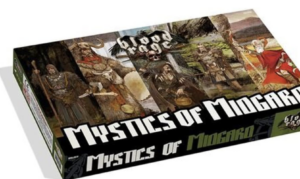
Some Commander players love careful optimization.
Others want gigantic dramatic moments.
Blood Rage exists for the second group.
This game thrives on huge plays, explosive combat turns, surprise card interactions, and emotional table reactions. You are drafting powers, building synergies, and setting up devastating turns that can completely shift the board state instantly.
Sound familiar again?
The card drafting especially appeals to MTG players because reading signals matters. Timing matters. Anticipating opponents matters. Sometimes hate-drafting matters because Kyle absolutely cannot be trusted with that upgrade card after what happened last game.
Blood Rage also understands an important truth: players enjoy feeling powerful.
Too many strategy games accidentally flatten emotional highs in pursuit of “perfect balance.” Commander players usually do not care about sterile balance. They want stories. They want moments. They want somebody at the table yelling, “ARE YOU SERIOUS?” after a ridiculous combo turn.
Blood Rage delivers that consistently.
Nemesis Feels Like Playing Against a Table Full of Hidden Agendas
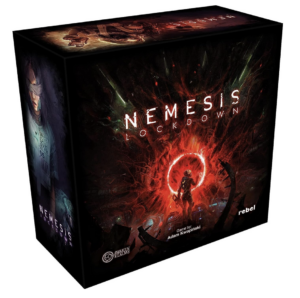
Nemesis is stressful in the funniest possible way.
Imagine cooperative survival horror where nobody fully trusts each other and everybody secretly has personal objectives that may or may not conflict with the group.
Commander players slide into this environment naturally because they are already conditioned to suspect literally everyone.
The atmosphere carries the experience hard here. The game creates paranoia beautifully. You never quite know whether another player is helping because it benefits the group or because it secretly advances their personal objective.
That uncertainty feels extremely familiar to anyone who has survived multiplayer Magic politics.
Nemesis also produces incredible table stories because systems interact unpredictably. Fires spread. Aliens appear at horrible moments. Escape plans collapse. Somebody inevitably sacrifices another player while claiming it was “strategically necessary.”
Sure, buddy.
The game can run long, and it absolutely leans thematic over perfectly balanced competition. Still, most Commander players I know care more about memorable experiences than tournament precision anyway.
Why Commander Players Often Become Great Board Gamers
Commander trains people to enjoy systems instead of just outcomes.
That distinction matters.
A lot of competitive games focus narrowly on efficiency and winning percentage. Commander players usually appreciate broader experiences. They enjoy deck expression, weird interactions, table politics, storytelling, experimentation, and social dynamics.
Those preferences transfer beautifully into modern hobby board gaming.
Honestly, the overlap between Magic players and board gamers was probably inevitable. Both hobbies reward creativity, strategic thinking, social interaction, and a willingness to spend alarming amounts of money on cardboard-adjacent entertainment.
The main difference is that board games occasionally come with tiny wooden sheep instead of foil variants.
Although give Wizards of the Coast enough time and they’ll probably find a way to monetize tiny wooden sheep too.
The Best Games Create Stories, Not Just Winners
That is ultimately the common thread between Commander and the best modern board games.
People remember stories.
They remember impossible comebacks. Terrible alliances. Greedy decisions. Betrayals. Panic. Dumb jokes that somehow became permanent table lore. They remember the player who accidentally doomed everyone because they misunderstood one rule and confidently committed to disaster anyway.
Those moments matter more than final scores.
The strongest hobby games create emotional texture. They give players ownership over the experience instead of simply handing them polished content to consume passively.
Commander figured that out years ago.
Now the broader board game world is catching up.


0 Comments