
Not Every Magic Player Wants to Farm Wheat for Three Hours
There is a certain type of board gamer who gets deeply excited about converting two stone into one sheep and a temporary discount token.
Aggro players are not those people.
An aggro player sits down at a table wanting momentum, pressure, dramatic swings, and the satisfying feeling of forcing opponents into increasingly terrible decisions. They enjoy speed. They enjoy tension. They enjoy making somebody mutter “already?” fifteen minutes into the game because combat has escalated into full catastrophe before snacks are even distributed properly.
This is why a lot of traditional Eurogames bounce off aggro players immediately.
If your favorite Magic strategy involves curving out aggressively and attacking before the control player emotionally settles into their chair, a four-hour economic simulator about 17th-century textile logistics may not hit the same emotional notes.
And honestly, that is okay.
The good news is there are absolutely board games that capture the same energy aggro players love in Magic. Fast escalation. Tactical pressure. Explosive turns. Combat. Trash talk. Constant interaction. Games where passivity gets punished and somebody inevitably declares, “You forced me into this,” before initiating complete social collapse.
Beautiful hobby stuff.
Blood Rage Feels Like Mono-Red Players Designed a Board Game
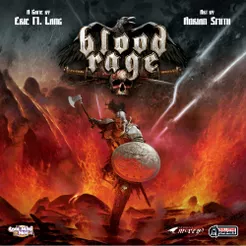
Blood Rage is chaos wrapped in Viking aesthetics and surprisingly elegant mechanics.
Aggro players usually love it almost immediately because the game rewards pressure and aggression instead of passive optimization. You are drafting cards, invading territories, fighting constantly, and chasing dramatic point swings through direct conflict.
Importantly, combat is not optional background flavor here.
Combat is the game.
The pace also works beautifully for aggro-minded players because turns stay active and the board state evolves constantly. Nobody spends forty minutes quietly building a grain economy while pretending that counts as “interaction.”
You are fighting.
A lot.
Even losing battles can benefit you depending on your strategy, which creates wonderfully reckless gameplay decisions. Aggro players understand this instinct deeply because many of them already treat their own life total like a negotiable suggestion anyway.
Blood Rage also nails emotional momentum. One clever combat trick can swing the entire table dynamic instantly. If you enjoy the feeling of resolving Embercleave and watching somebody’s soul leave their body in real time, this game creates similar emotional experiences regularly.
Kemet Rewards Constant Pressure
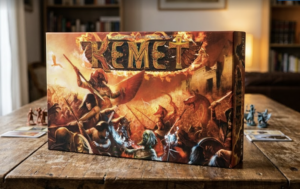
Kemet feels aggressively allergic to turtling.
Good.
Aggro players thrive in games where momentum matters, and Kemet practically shouts at players to stop hiding and start fighting. Resources come primarily through controlling temples and engaging directly with opponents, meaning passive play usually falls behind quickly.
This creates a fantastic table atmosphere because everybody remains involved constantly.
There is no “I’ll just quietly build my engine over here for an hour” energy. The game pressures players into confrontation naturally. Even defensive strategies require active positioning and calculated aggression.
The upgrade system especially appeals to Magic players because it feels a bit like assembling evolving deck synergies mid-game. Different power tiles radically shape your faction’s capabilities, and combining them effectively creates those satisfying “my build is online” moments aggro players love.
Also, giant mythological monsters help.
Hard to overstate the emotional value of giant mythological monsters.
King of Tokyo Understands That Punching Your Friends Is Fun
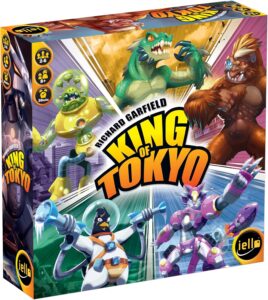
King of Tokyo is not pretending to be a deeply intricate strategic masterpiece.
It understands its assignment perfectly.
You are giant monsters punching each other while rolling dice and making increasingly reckless decisions for temporary advantage. The game moves quickly, stays loud, and generates constant interaction.
Aggro players adore this because downtime barely exists.
Something important is always happening. Somebody is attacking. Somebody is panicking. Somebody is greedily staying in Tokyo one turn too long because their brain stopped functioning after rolling too many victory points.
The pacing feels almost arcade-like compared to slower strategy games.
And honestly? That matters.
A lot of hobby gaming accidentally confuses “long” with “deep.” Aggro players usually recognize immediately that fast games can still produce incredible tension and meaningful decisions when pressure stays high.
King of Tokyo also captures a subtle aspect of aggro psychology extremely well: calculated recklessness.
Aggro players often know they are making dangerous decisions. They simply believe momentum matters more than safety.
Sometimes they are right.
Sometimes they are explaining to the group why staying in Tokyo at two health was “technically defensible.”
Cosmic Encounter Thrives on Social Aggression
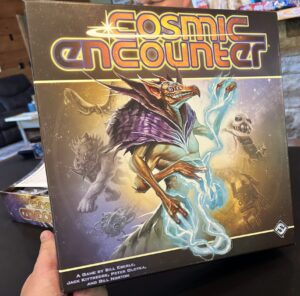
Some aggro players enjoy direct combat.
Others enjoy creating absolute table chaos through negotiation and manipulation.
Cosmic Encounter serves the second group beautifully.
This game feels like multiplayer Commander politics after three energy drinks and a mild head injury. Every faction breaks rules in ridiculous ways. Alliances shift constantly. Negotiations become emotional theater productions. Players bluff, threaten, manipulate, betray, and occasionally beg for mercy while pretending they still have control over the situation.
Naturally, aggro players often flourish here.
Why?
Because aggression in Cosmic Encounter is not purely mechanical. Social pressure matters too. Players who push the pace, create instability, and force difficult decisions often control the emotional rhythm of the table.
That feels very familiar to experienced aggro pilots.
A strong aggro player in Magic already understands tempo psychologically. They know forcing reactive decisions creates mistakes. Cosmic Encounter weaponizes that principle socially.
Also, the game produces unbelievably stupid stories in the best possible way.
The kind your group references six months later while accusing Kevin of “pulling another Cosmic Encounter move” during unrelated board games.
Clank! Gives Aggro Players Permission to Be Greedy
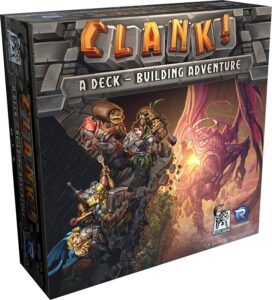
Aggro players are often deeply vulnerable to greed.
Clank! exploits this magnificently.
Technically, the smart strategy involves escaping the dungeon safely with respectable treasure before danger escalates too far.
Aggro players hear this information and immediately sprint deeper into the dungeon chasing bigger rewards like raccoons discovering unsecured garbage cans.
The game rewards risk-taking emotionally even when it punishes it mechanically. Every turn creates tension between caution and momentum, and aggressive personalities consistently push harder than they probably should.
Which makes the game incredibly entertaining.
The deck-building system also scratches a similar itch to aggressive Magic gameplay because your turns become increasingly explosive as the game progresses. You start weak, scale quickly, and eventually chain together satisfying movement and treasure turns that feel genuinely powerful.
Then somebody triggers a disaster because they got greedy again.
Probably you.
Aggro Players Need Emotional Momentum
This is the real throughline connecting all these games.
Aggro players enjoy emotional momentum more than pure optimization.
They want games where pressure matters. Tempo matters. Interaction matters. They enjoy forcing action instead of waiting politely for systems to unfold at a respectful pace.
That preference often gets misunderstood by slower strategic players who assume aggression means shallow thinking.
Not true at all.
Good aggro play actually requires excellent tactical evaluation, sequencing, timing, and risk assessment. The difference is that aggro players prefer dynamic problem-solving instead of long-term economic optimization.
They would rather make twenty meaningful combat decisions than spend two hours quietly adjusting resource ratios.
And honestly, hobby gaming needs both personalities.
If every game became pure efficiency optimization, the entire hobby would start feeling like a corporate budgeting seminar with nicer artwork.
The Best Aggro Games Keep Everyone Engaged
One thing aggressive board games consistently do well is maintain engagement.
Downtime kills momentum, and momentum is basically oxygen for aggro-minded players.
Games with constant interaction, visible pressure, tactical adaptation, and shifting board states naturally hold their attention longer because something meaningful always feels imminent. The table stays emotionally active.
That emotional engagement matters more than hobby gamers sometimes admit.
People do not just remember final scores. They remember moments. Big swings. Ridiculous gambles. Ill-advised attacks. Last-second victories. Terrible alliances formed out of desperation and immediately regretted afterward.
Aggro-oriented games produce those stories constantly because the systems encourage conflict instead of avoiding it.
Not Every Game Needs to Feel Like Spreadsheet Night
Look, there is absolutely a place for thoughtful Eurogames and deeply optimized strategy experiences.
Still, sometimes people just want to summon giant monsters, invade territories, betray their friends, and create memorable chaos for two hours.
Aggro players understand this instinct naturally.
They are chasing excitement, pressure, tactical adaptation, and emotional momentum. The best board games for aggro players recognize that pacing matters just as much as strategic depth.
Possibly more.
Because if your board game feels like mandatory accounting homework with decorative meeples, the aggro player mentally checked out forty-five minutes ago and is already wondering whether anybody wants to play Commander instead.


0 Comments